12 Ways to be Penny-Foolish, Pound-Wise
A known financial mistake to be penny-wise, but pound-foolish, that is to say frugal and discerning with small expenses but spendthrift on the big ones.
You might think it's therefore best to be penny-wise, pound-wise, and that could be what's best for your bank account, but it's an austere and joyless way to live for many of us.
I'd argue the most pleasant quadrant is actually penny-foolish, pound-wise. Being penny-foolish lets us benefit from our misplaced intuition to overvalue small immediate gains while still enjoying pound-wise financial security.[1]
Blogs are filled with guides on pound-wisdom, which may go in a later post if you want my specific take.
So here's my guide to penny-foolishnesss, though a word of warning: ensure you're indeed pound-wise when doing this, lest you end up in the dreaded penny-foolish, pound-foolish quadrant![2]
1) Still enjoy coffee
A general heuristic could be to invert all out-of-touch financial advice, like "don't get avocado toast or coffee". These things often don't add up to much, but still feel expensive, perhaps even more so because of the scolding.
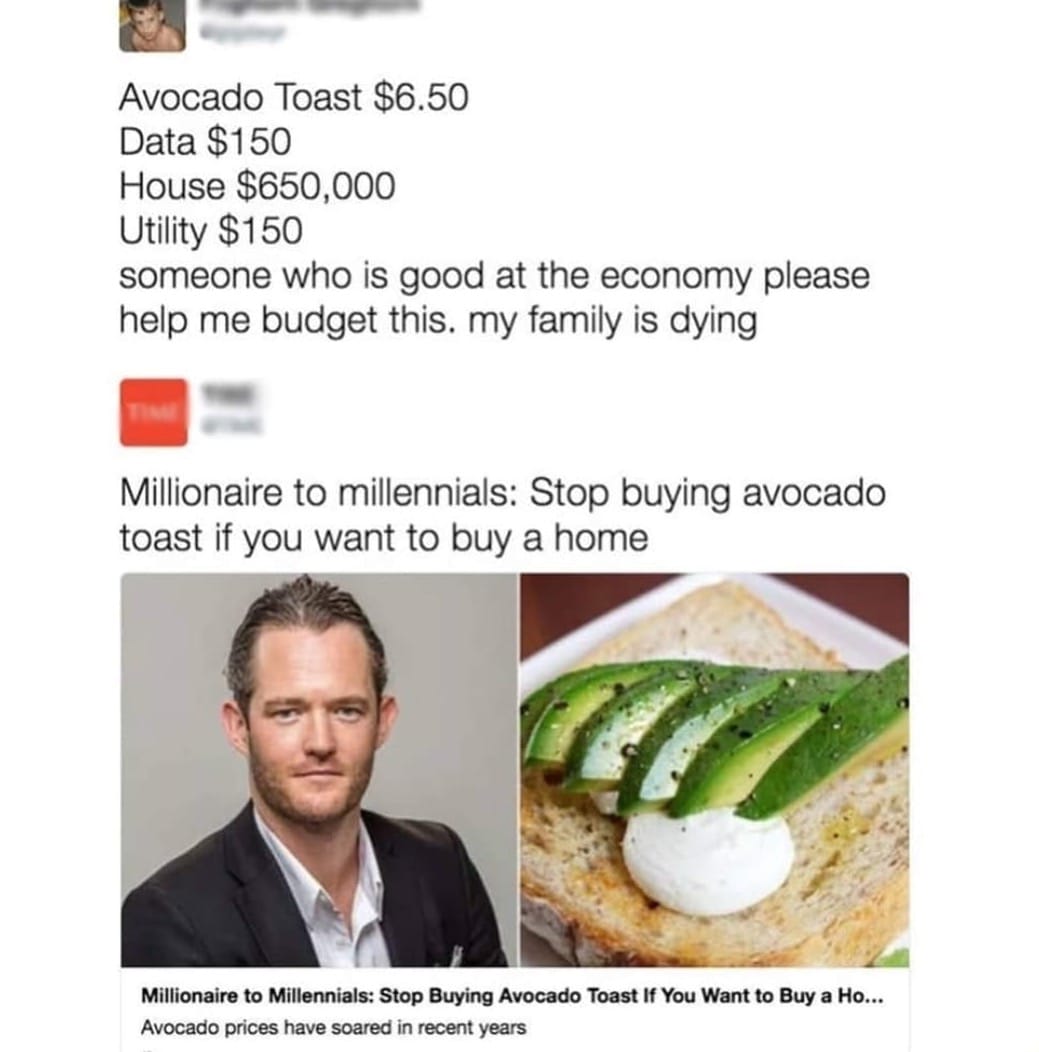
If you're really buying $5 coffees daily, get a drink subscription for typically $50/month or less from Pret, Panera, or oftentimes your local indie coffee shop (if you're the discerning type).
In fact, I don’t even usually drink coffee, but when I lived in London, I still got the Pret subscription and drank decaf. The immense feeling of luxury from having free (i.e., sunk-cost) coffee clubs across the city made it one of my best-ever lifestyle purchases (and I wouldn't shut up about it).
2) Buy the “nice” version of things
This can be a generally good financial habit, since these items often last longer and are more repairable, but in some cases, the ROI is unclear. Rather than deliberating, for smallish purchases, just go for it. Even if the item doesn't pay for itself, you get to enjoy higher quality the entire time, and the expense amortizes over a long time/many uses.
Examples: Nice leather shoes, Japanese nail clippers, good bedsheets. Some even include lifetime warranties: Darn Tough socks, Osprey bags.
Yes, sometimes you’ll buy “nice” things, and they’ll turn out not worth it, but that’s the whole point! You get the luxury of doing this and not really caring because it doesn’t add up to much.
3) Follow the “Magic of Tidying Up”
For clothes specifically, try to shoot for a small number of high-quality items you like and actually wear.
You can do this by making your closet a Move-to-Front self-organizing list: Whenever you return an item after laundering/wearing, put it back on one side of your wardrobe. Over time, all the regularly worn clothes will find themselves on one side and the less-used ones on the other. Then try to improve the types you wear and donate the others.
4) Get nice consumables
I use this toothpaste (with nano-hydroxyapatite) and Korean sunscreen that doesn’t burn if it gets in your eyes. Consumables have the benefit of being variable-cost (i.e., you pay for how much you use), so the buy-but-don’t-use scenario is capped.
5) Good produce (i.e., fruit, veg, nuts)
This, like the toothpaste, might be more like a health investment than a frivolous luxury, but even if it weren’t, the small cost would be worth the quality. When I say high-quality, I'm talking about stuff you’re more likely to eat rather than some comparative nutritiousness, as that probably dominates the health effects anyway.
If you want good produce and a good deal, ethnic stores/markets (in the US, usually Asian or Latin American) tend to offer the best combination. Have an LLM help you pick out the good wares if you’re unfamiliar.
6) Discard stuff, knowing you can buy it again
If it's cheap, you can have another delivered to you in 48 hours. Yes, even stuff I possibly just misplaced, I sometimes buy again rather than continue looking for it.
This probably looks wasteful and consumerist, but consumer goods just aren't very carbon-intensive, at only ~0.167 kg CO2/$, while for example a flight is nearly 6x as much at ~0.976 kg CO2/$. A lifetime of wasteful small consumer purchases still likely releases less carbon than a few long-haul flights. Also, as shown below, you can easily mitigate the impact through donations:
7) Donate, rather than sell
Usually, you never actually get around to selling small stuff, and even if you do, arranging the transaction is a headache. Accept penny-foolishness and donate it. Donating used to be a chore, but with apps like Olio, you can more or less order a free pickup like it's Uber Eats. The app is strongly incentivized to prioritize donors over donatees, so the karma system enables donations at your total convenience.
8) Buy multiples of stuff you like
Multiples of stuff will really instill that feeling of mass-produced abundance in your bones.
- Toiletries for your travel bag
- Clothes you like: buy multiples for when they are in the laundry, wear out, the same thing in various colors, etc.
- Items for your not-too-expensive hobbies. E.g.: I have meditation cushions pretty much everywhere I visit, periodically, i.e., home, office, parents’ house, etc.
- For favored consumables with a long shelf life, buy them in bulk to instill a sense of limitless abundance. E.g: I buy Lao Gan Ma in 6-packs.
10) Find small instant-buys
- If it occurs to me that I may read a book, I immediately buy it (digital versions are particularly good for this, as they are cheaper and don't add to clutter).
- Single-payment mobile apps (i.e., not a subscription or DLC). The Apple App Store initially anchored consumers to a ridiculously low price for mobile software, and today you can still buy apps for single-digit prices.
11) Accept one-off ridiculous luxuries
Occasionally, I'll buy something that seems ridiculous as a temporary item, but is still worth it for the temporary lifestyle upgrade.
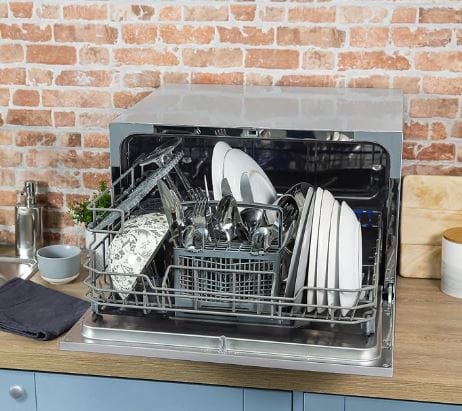
- Once, when at a sublet without one, I bought a countertop dishwasher and just let the landlord keep it at the end. Seems crazy, but they are available for <$200, and dishwashers are far more environmentally-friendly than hand-washing.
- Similarly, I ordered a full-sized thermal printer, which I later similarly gave away. They are very compact, come with special paper, don't use ink, and at ~$50 are better than trying to find a library or print shop on those few occasions when you really need a printer.
12) Keep buffer money in your low-yield account
I know you're always supposed to have your money maximally work for you, but having some extra cash as a buffer removes the stress of worrying about specific balances at a low risk-adjusted cost. You'll have to know yourself here, as you could be tempted to spend this immediately; it might require a separate, annoying-to-access account.
Put a dollar value on your time
One of the most valuable perspectives in all this, and one that may even net you out ahead if done well, is to put a numerical value on your time.
If you are salaried, divide your salary by 2000 to get a rough estimate of your hourly rate, e.g. $70,000/year = $35/hour.
However, many time-use surveys show that workers spend a minority of their time on job duties, with only 39% being a typical figure. When you also consider the all-in cost for employees (i.e., benefits) as ~1.3x salary, the above figure could be ~3x too small!
So if your productive time is worth $100+/hour, go ahead and buy that dishwasher.
Unless, of course, you really like being penny-wise, i.e., "getting a deal", in which case, enjoy. ↩︎
This, like all non-generic advice, is great for some and terrible for others. If you generally struggle with financial discipline, or rather, your carefully-considered budget is truly tight, you don't need any added foolishness. This may be most people's situation, though maybe not most of our readers. I hope even those struggling might find ideas for affordable luxuries to take the edge off, and not some guy gloating about his dishwashers. ↩︎
As a helpful demonstration of penny-foolishness, we have not bothered to set up affiliate links on the blog. ↩︎
I realize this may all sound painfully materialistic. For those who have transcended materialism, we truly do envy you. In the meantime, the rest of us can hopefully appreciate the cheap, if not simple, things and recognize a material abundance that would awe our ancestors. ↩︎