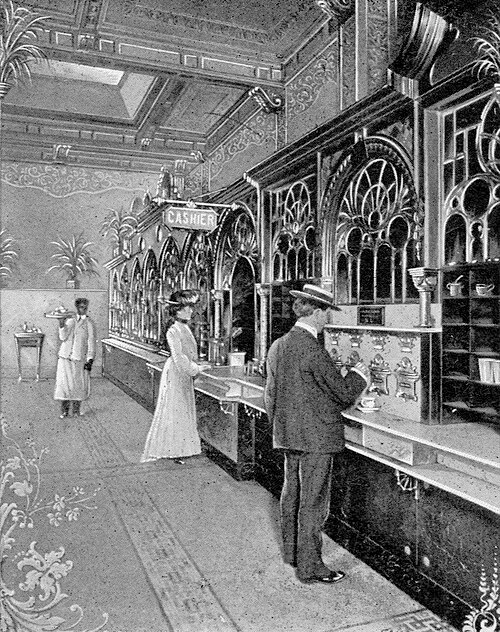
Slot Machine Lunch
Ok so: apparently in the early 1900s there was a chain of automat diners where people could put a nickel in a slot and get a slice of pie (or a mac and cheese, or other such foods) out of a large wall of vending machines.
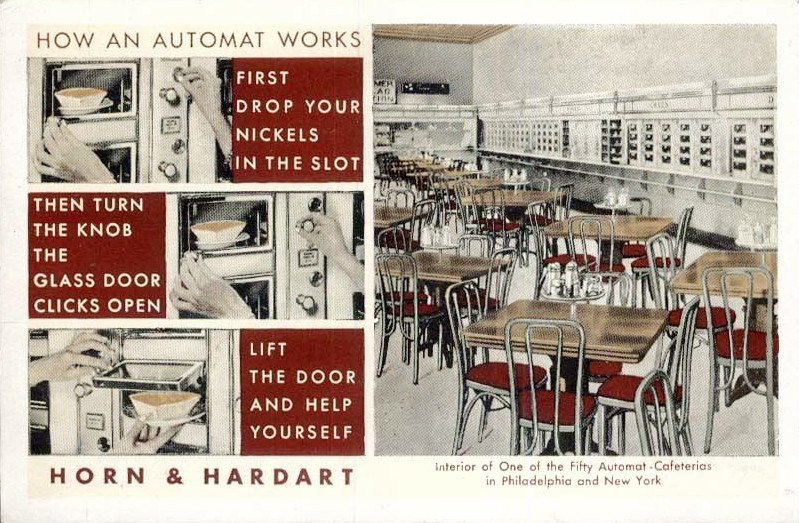
For another nickel you could get a cup of hot coffee out of the head of a dolphin, and this was a big deal because (if I understand correctly) french press coffee was only previously available in New Orleans at the time.
This all sounds kind of bats, no? I remember people wow-ing about food vending machines in Japan in the 1990s; how is it possible there had already been an entire automated food empire in Philly in 1902?
Did you all know about this? I swear I had never heard of it until I stumbled on it just now, and if you'd described it to me and asked if it could have existed before 1990 I would have said "no"? But instead, it was huge in the 1900s and shut its last store down in 1991.
Despite having stores in only Philadelphia, New York and Baltimore, at one point they were the largest restaurant chain in the US (!?)
There's various details as to why the Horn & Hardart company specifically lost its luster, involving the usual tales of poor succession and bad management. (If you want to know more there's a documentary called The Automat, with Mel Brooks and others – it has great old footage if you're into watching machines). The brand has been bought out of bankruptcy and is now selling coffee pods, inevitably: they claim they're going to resuscitate the actual automats too. That this specific company failed is all well and good, capitalism is one long chain of flowerings and wiltings.
But what I really want to know is: why did the concept of automated diners not succeed, overall? Isn't the long march of history towards more automation, not less? How is it possible that we went from automats in 1900 to non-automats by 2000?
Obviously we still have fast food restaurants that work in various factory-like ways, and obviously the automats also involved tons of human labour (e.g. to put the food into the vending machines in the first place). But it still feels more futuristic to me than e.g. the literal Burger Kings which apparently replaced many of the Horn and Hardarts. What's the economic story here, why did automation go backwards in this industry?