I Wish Pollsters Would Ask About Parent-Status
we all have wishes, granted. But who has wishes granted?
Political pollsters in the US tend to stratify their answers by race, age, and gender. No demographic group is a monolith, but we understand that there are average similarities in voting behavior across these groups.
There's a million different things that affect how people vote, and polls generally only reach a few hundred people each, so if you do enough analysis on enough factors you'll eventually just create a mess. It makes sense that we should limit analysis to:
1) simple, major categories that have large numbers of people in each bucket,
2) factors that plausibly have a major impact on voting preference.
Polling is not my expertise, so it's very possible that pollsters know something I don't here[^1], but I feel like parent-status is a big and important enough category that it should be up there with race, age and gender.
Here's an example from the Pew Research Center in 2024:
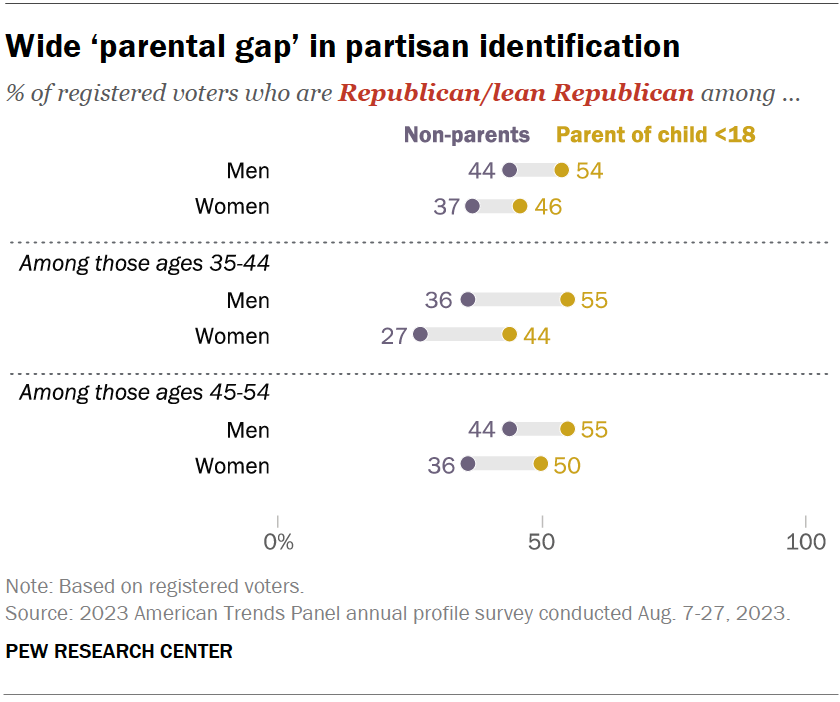
In this sample, being a parent of a child under 18 was associated with a 10 point shift in partisan affiliation. This is bigger than the average gap between men and women, and the average gap by age-decade (in this one example).
I suspect that some of the voting behavior difference by age, including some of the shift in differences over time, is actually about parent-status in disguise. So many different things have happened in the last 40 years that if I tried to make a data-argument about this it would be totally spurious, but roughly my claim is that 18-34 year olds will vote more-differently from 35-44 year olds as more people delay child-having to their 30s (or never have children).
[^1]: for in-person exit polls, my understanding is that race age and gender are just visually estimated by the poll-taker rather than asked explicitly, which you can't do for parent-status, for example