A Few Ways to Introduce Advanced Vocabulary into Your Child’s Life
guest post!
There are a number of children’s books that do this excellently (thank you, William Steig!), though, sadly, far fewer than there should be. This is a list of other, stranger methods.
1. A list on the wall
This does, indeed, involve a list on the wall, which reminds me to use more advanced words in daily speech. (For example, “Helen, you are so industriously coloring in your coloring book!”) I switch out the list periodically.
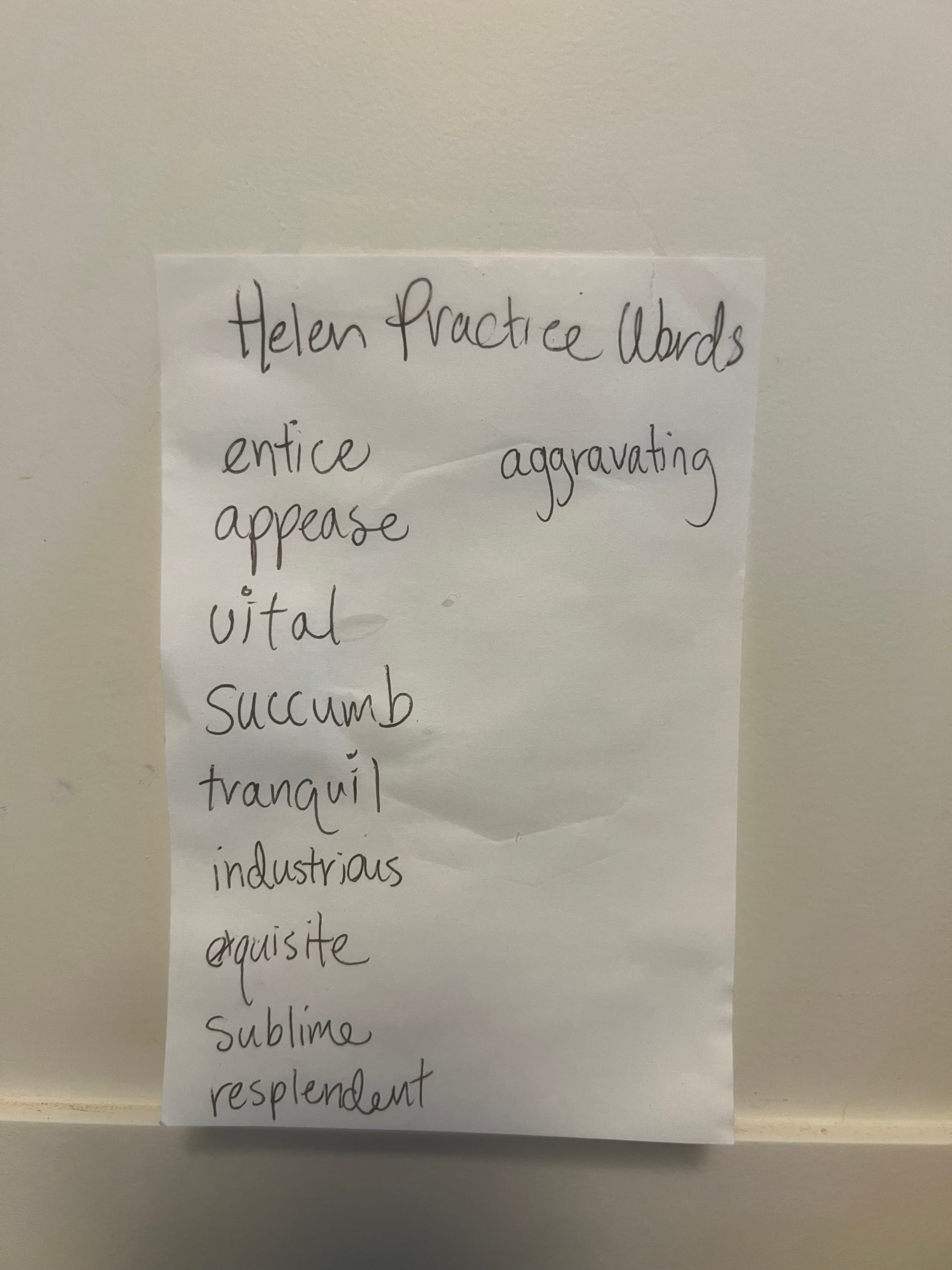
2. A list while reading
I also hold a similar list while reading a children’s book aloud and try to replace simpler words as I read with these words.
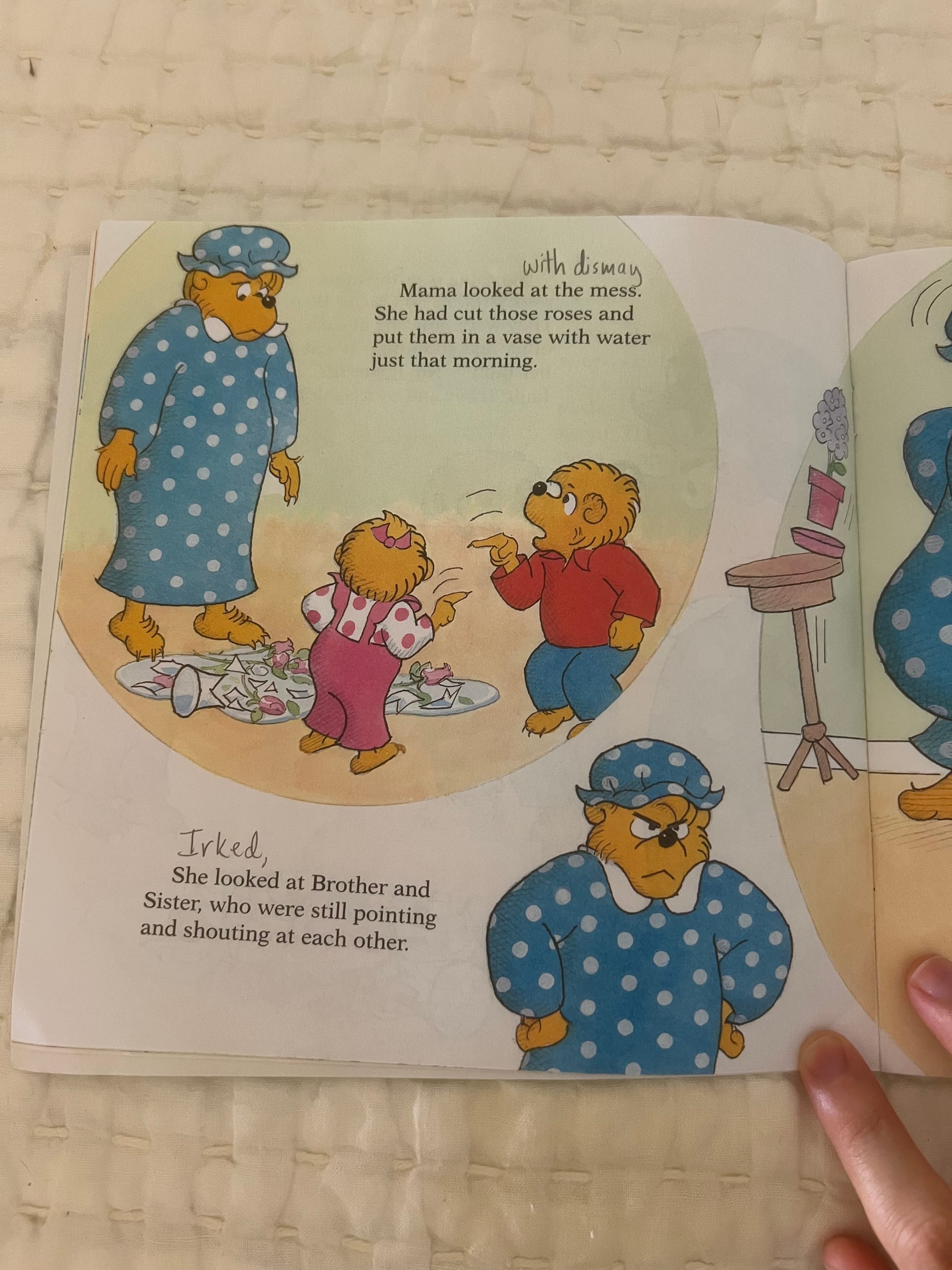
3. More advanced words written in a simpler book
I wish more illustrated books were written at a more advanced level. In the meantime, there’s always defacement.
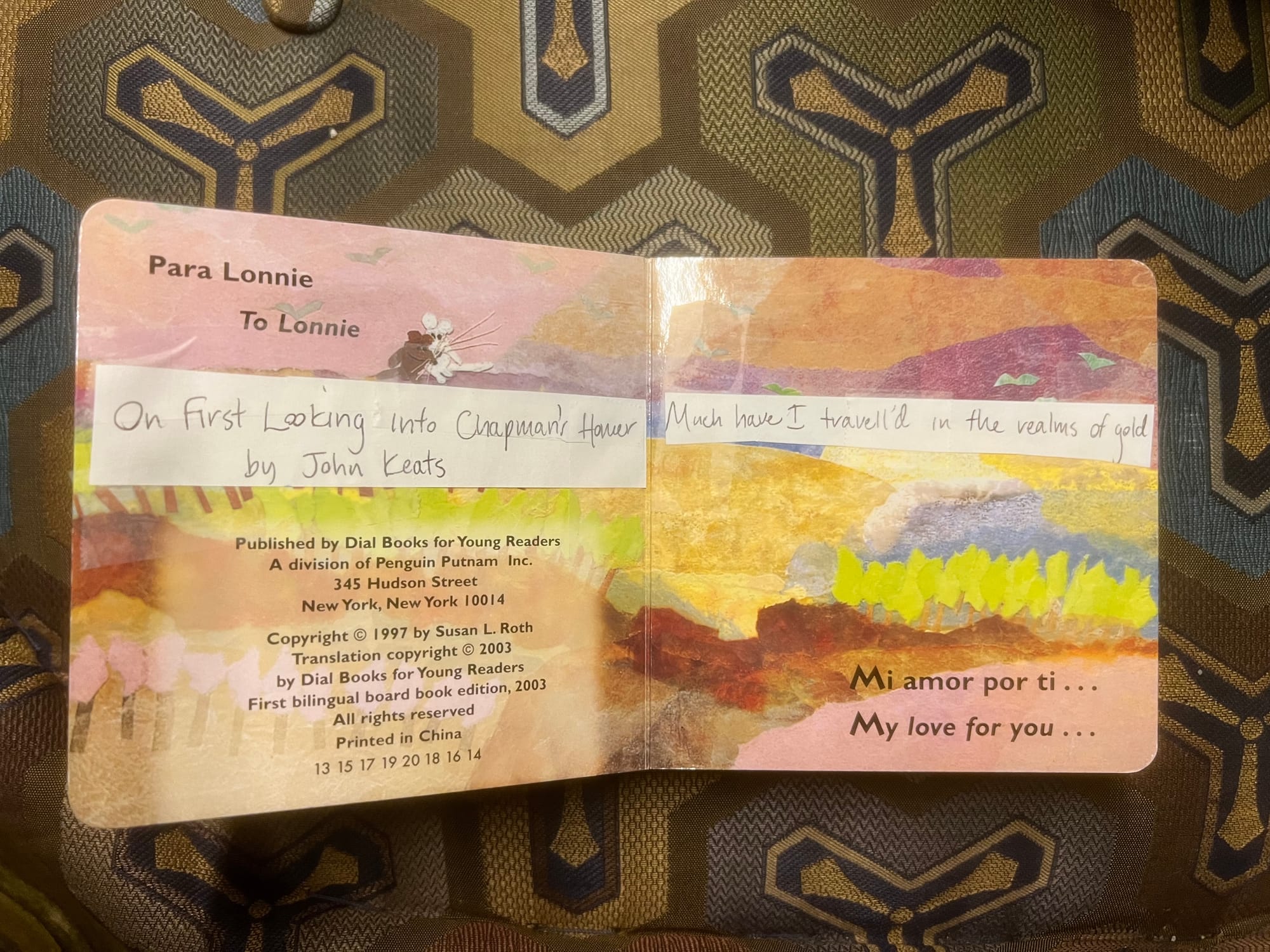
4. Poem in a book
I replace all of the words in a book with a poem, not something I could get away with now that my daughter is four. (And perhaps this one was always more for myself, really.)
5. Poem or bedtime
I give my daughter the choice—poem or bedtime. She always picks the poem. I’ve memorized a number of them (see #4), so I don’t have to pull out my phone in the dark. Some favorites lately include “The Song of Wandering Aengus,” “The Tyger,” and “Drummer Hodge.”
6. Acting out new words as we read
Of course, this only works for a subset of words. My daughter likes to act out words like somber, sorrow, inquisitive, etc.
Sometimes I think all of this is too ridiculous, and then I remind myself that I am so grateful to be able to access complex literature. And that language is learned not only most effortlessly but perhaps best when one is young. As for whether my daughter will appreciate this or resent it—I will have to get back to you in twenty years.
Marlene writes about books and parenting, check out her blog!
 Marlene Morgan